

May 132012
 
Catnip Hanging to Dry

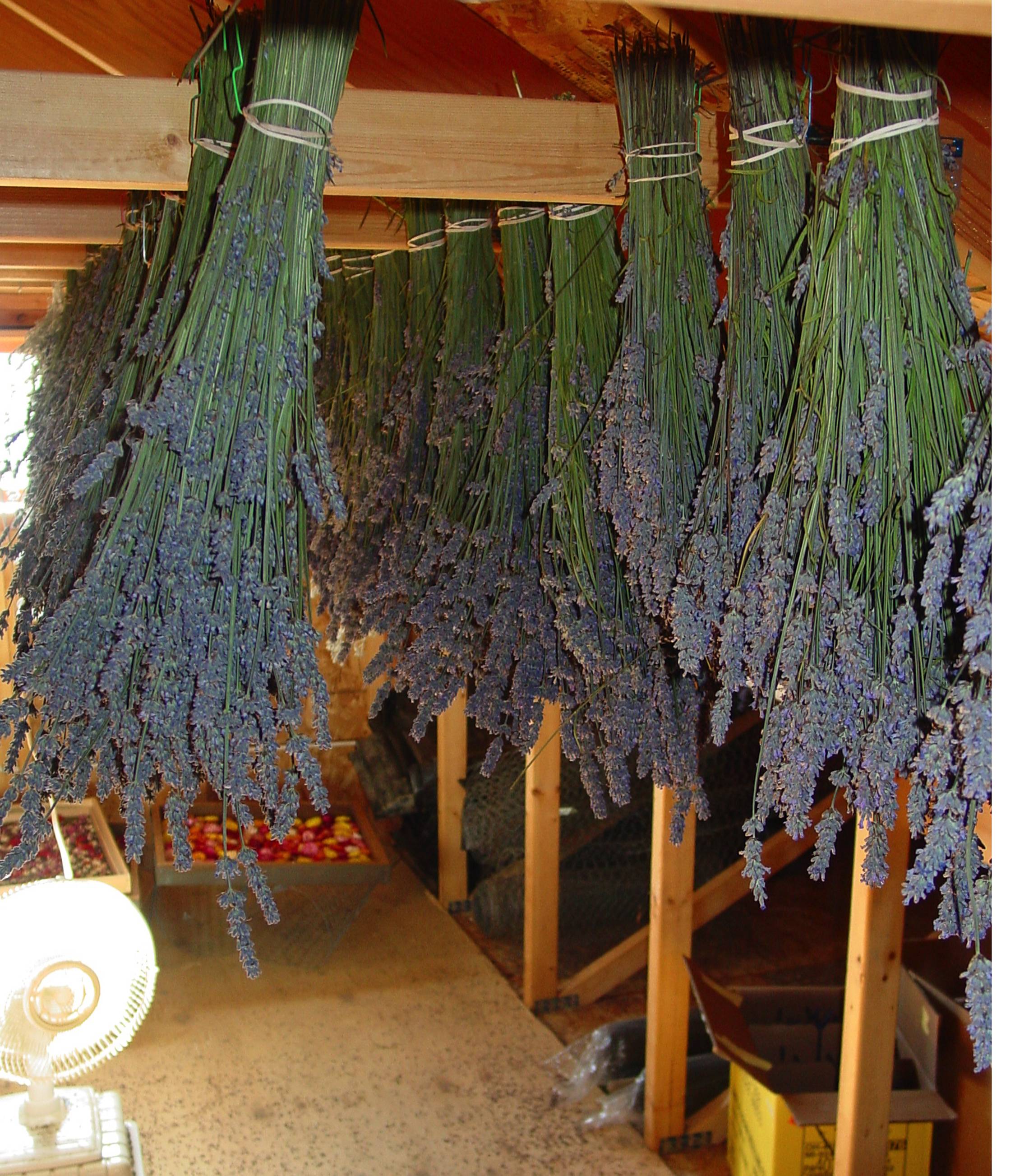
We are growing more than lavender around here. Over the last couple of days we’ve harvested a lot of one of lavender’s cousins, catnip. Both these plants are in the lamiaceae family (mints are in that family, the members of this family have square stems).

Catnip Hanging to Dry

Catnip Hanging to Dry

If you’ve ever watched what happens when you put a cat and a pot of catnip (Nepeta cataria) together, you’ve witnessed what could rightly be called the feline version of reefer madness. Most cats, even lions and tigers, are helplessly drawn to nepetalactone, an aromatic compound in the plant’s leaves. They’ll energetically play with catnip-stuffed toys — even roll on the plants themselves! — and become frisky, playful, and even amorous. Most cats find it irresistible, but not all cats. It’s been discovered that sensitivity to catmint is inherited, so if your cat turns her nose up at catnip, it may just be that she’s immune to its spell and not a big party pooper. We have our own quality tester. Lavender Wind Farm’s cat, Siduri,

Siduri

Siduri

who’s job is to make sure the current year’s crop is excellent for cats.

For people, on the other hand, Nepetalactone has the opposite effect. Catnip tea is traditionally used to reduce tension, nervousness, and anxiety. And like many other members of the mint family, it can settle a stomach and ease motion sickness. For generations, in fact, herbalists have recommended it to relieve discomfort in colicky babies.

Catnip (Nepeta cataria)

Catnip sprig

Catnip sprig

and Catmint (Nepeta x fassennii)

Catmint

Catmint just starting to bloom

are actually different plants. Cats are not attracted to catmint the way they are to catnip, although sometimes one will be interested. Catmint has graceful long spires of blue flowers. Catnip’s flowers are white. Catnip will reseed itself and can become a bit of a pest, whereas, Catmint will not reseed (being a hybrid, its seeds are sterile). If you want blue beauty in your garden most of the summer, Catmint is your plant.

Catnip is the more potent when it comes to herbal effects. As mentioned above, it has numerous health benefits when used as either a tea (infusion) or tincture. A researcher at Cornell University1 says that Catnip developed it’s unique scent and chemical profile to repel insects that might want to chomp on its leaves. This turned out to be a great hint to researchers who seek mosquito repellants. Catnip essential oil has been shown to be effective against those pesky, buzzing, disease bringers – but the effect varies depending on how, where, and when the oil is distilled.

For an easy way to protect against bugs, you can use catnip, along with lavender, and make some bug repellant sachets. Combine dried catnip and dried lavender and use that mixture to stuff sachet bags. Put them in your closet and drawers for a much more natural and pleasant way to keep moths and bugs at bay.

Catnip is an amazing plant – your stomach, your cat, your skin, and your clothes will thank you for growing and using it.

(Authors: Sarah Richards & Toni Grove)

 Posted by at 4:01 pm
Lavender Baklava

Lavender Baklava

Toni Grove, our resident herbalist and nursery worker, came to work with her FAMOUS Baklava for a goodbye party for our longtime staff member Nancy. She made it with lavender!! It was fabulous! Recipe Filling 4 C Finely Ground Walnuts 1/3 C Sugar 1/4 tsp Cinnamon 1/4 C finely ground lavender 1/2 Lb. melted butter [read more...]

International Lavender Conference

Attending the International Lavender Conference this year was easy… It’s in our own backyard in Sequim, WA. Dr. Tim Upson (from Cambridge University Botanic Gardens), is the theme speaker and has been sharing his knowledge of the many different kinds of lavender in the world. The complexity of this one genus in the Lamiaceae family is amazing. [read more...]

Puget Sound Food Network Article

Puget Sound Food Network Article

Sherrye Wyatt wrote a fabulous article about us in the Puget Sound Food Network newsletter. Here’s the intro: Sarah Richards owns the only lavender farm on Whidbey Island.  With views of the Olympic Mountains and the Strait of Juan de Fuca, she has built a popular destination for tourists.  She has also developed a full [read more...]

Parking for this old house!

Parking for this old house!

Last night the Coupeville Town Council made a wonderful vote! They decided that historic houses within certain commercial areas in Coupeville are exempt from parking ordinances. I watched the process as the item, that had been part of a larger discussion, was presented by the town planner, Larry Kwarsick and then discussed by the council members. [read more...]

Seeking Purple (Tulips)

Seeking Purple (Tulips)

Looking for purple in April we found these tulips behind the gazebo. When you’ve got a lavender farm the search for purple is endless. It’s a good day when we find it! Meanwhile, we are planting thousands of more lavender plants, sunflowers, chamomile and other herbs. It’s green, busy and beautiful here. Come see for [read more...]

Full Bloom Viewing

Full Bloom Viewing

Hundreds of people ask us every year…. “When is the best time to see the lavender in bloom?” The short answer is summer. But that is really short and doesn’t really give you the full story. Lavender’s home turf is the area around the Mediterranean. It thrives on the wet winters and dry summers in [read more...]

Toni's Notes: What are essential Oils?

Toni’s Notes: What are essential Oils?

What are essential oils? Essential oils are concentrated complex aromatic compounds that are extracted from plants, usually through steam distillation. Also known as volatile oils, they’re fragrant because the molecules that make up these compounds are tiny and can easily travel up into the air, unlike fatty-acid-based “fixed” oils, such as olive or corn oil. [read more...]